
Personalization used to be a differentiator. A brand that remembered your name, your preferences, or your purchase history felt special. It stood out.
That is no longer the case. Personalization is now the baseline expectation — and falling short of it has real consequences.
Research from Contentful shows that 71% to 73% of consumers expect personalized or individually relevant experiences from the brands they interact with, and 76% report frustration when they do not receive them. [1] That frustration does not stay private. It shows up in reviews, in social media posts, and in the decision to take their business somewhere else.
The stakes of getting personalization wrong have never been higher — and the definition of “wrong” has expanded significantly.
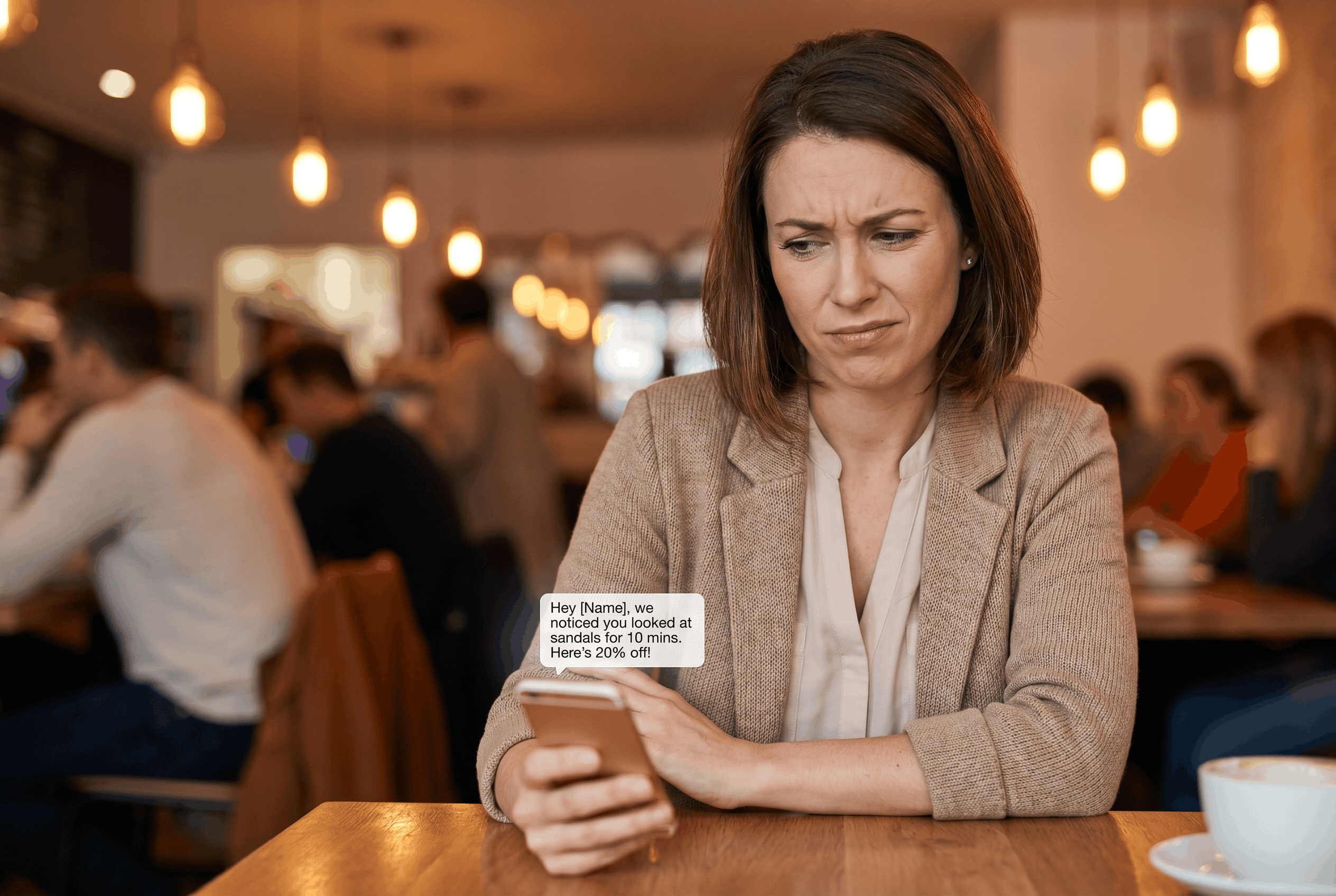
There are two ways to fail at personalization in 2025 and 2026. The first is not doing it at all — sending the same generic message to your entire audience and hoping something sticks. The second, and increasingly common, failure is doing it badly — using data in ways that feel invasive, irrelevant, or tone-deaf. Research shows that 53% of customers report negative outcomes from poorly executed personalization. [1] The “creepy” factor is real, and it damages trust in ways that are difficult to repair.
The line between personalization that feels helpful and personalization that feels intrusive is not always obvious, but the principle behind it is consistent: consumers are comfortable with personalization when it is based on data they knowingly shared, and uncomfortable when it feels like surveillance. Research confirms that 69% of consumers appreciate personalization if it is based on data they explicitly provided, while only 37% trust companies with their personal data broadly. [2]
That gap — between what consumers will accept and what they actually trust — is where most personalization strategies go wrong. Brands that use behavioral data collected without clear consent, or that surface information in ways that remind customers they are being tracked, trigger the exact opposite of the intended response.
The businesses that are getting personalization right in 2025 and 2026 are building it on a foundation of transparency and consent. They are collecting data through direct interactions — purchase history, stated preferences, explicit opt-ins — and using it to deliver experiences that feel genuinely relevant rather than algorithmically assembled. They are also giving customers control over their data and their preferences, which paradoxically increases trust and willingness to share more.
Salesforce’s research on connected customer experiences consistently shows that customers who feel a brand understands them are significantly more likely to remain loyal, spend more, and refer others. [3] The ROI on personalization done right is substantial. The cost of personalization done wrong — in lost trust, public complaints, and customer churn — is equally significant.
Conversion Media Group helps businesses build marketing strategies that reach the right people with the right message at the right time — without crossing the line into territory that damages the relationship. Call us at 1-800-419-3201.
[1] Contentful, “Personalization Statistics”