
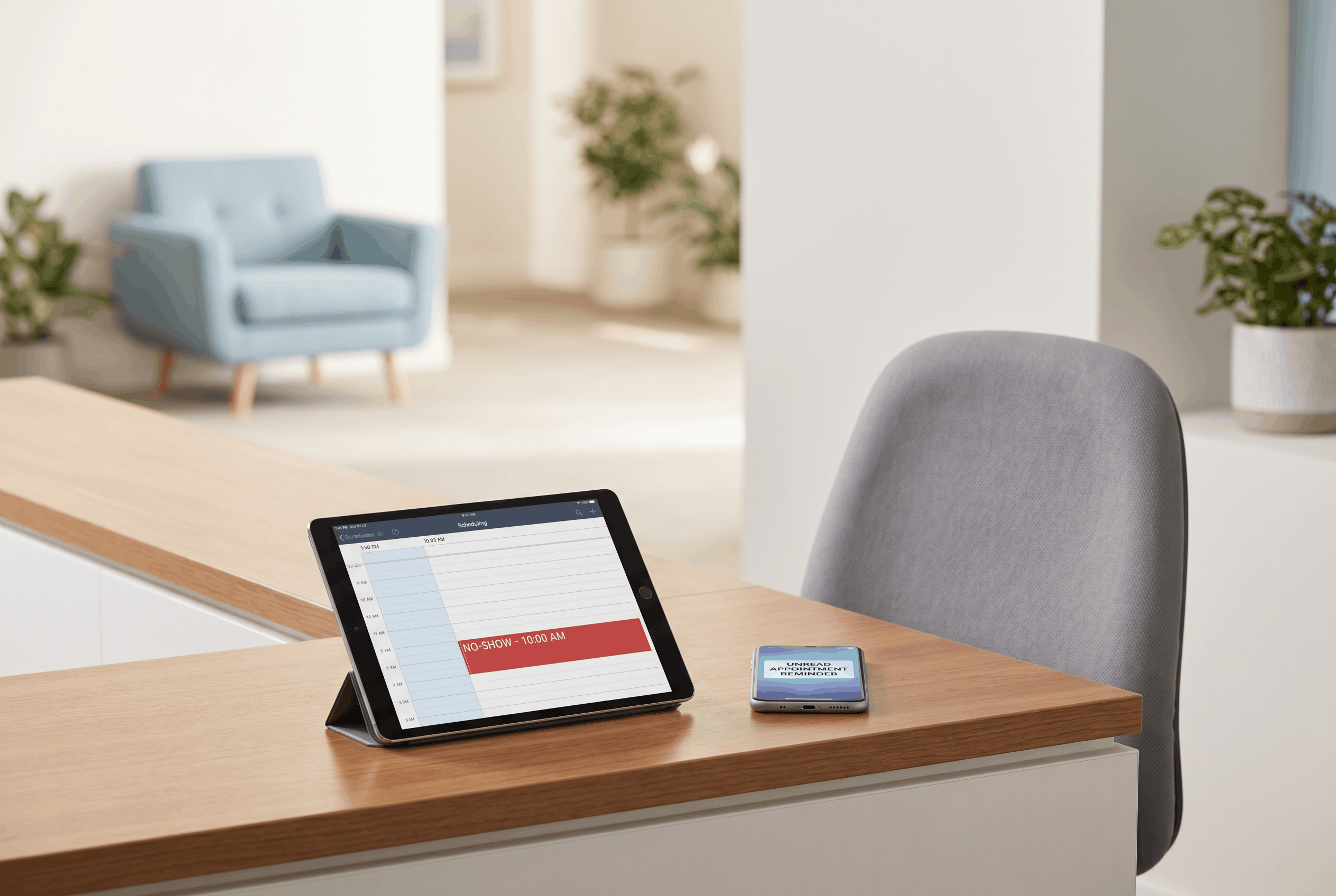
Every service business has a no-show problem. Most of them have no idea how much it is actually costing them.
A patient who does not show up for a medical appointment. A client who misses a consultation. A student who schedules an enrollment call and never dials in. Each of these events feels like a minor inconvenience in the moment — a gap in the schedule, a slot that could have been filled. But when you add them up across a week, a month, a year, the financial impact is significant.
Research puts the average no-show rate across service industries at roughly 20% to 23% of all scheduled appointments. [1] In some specialties and sectors, that number climbs higher. And each missed appointment carries a direct cost — in lost revenue for the time slot, in the administrative overhead of rescheduling, and in the downstream impact on patient or client outcomes that can affect long-term retention.
The healthcare sector has quantified this most precisely. Studies published in peer-reviewed journals estimate that no-shows cost the US healthcare system billions of dollars annually, with individual practices losing meaningful percentages of their daily revenue to unfilled appointment slots. [2] But the problem is not unique to healthcare. Any business that operates on a scheduled appointment model — legal services, financial planning, home services, education enrollment — faces the same dynamic.
The good news is that this is one of the most solvable problems in business operations. The research on appointment reminder systems is consistent and compelling: automated reminders — delivered via SMS, email, or phone — reduce no-show rates by 30% to 50% in most implementations. [3] The technology required to do this is widely available, inexpensive, and straightforward to deploy.
The businesses that have implemented automated reminder systems report not just lower no-show rates, but higher patient and client satisfaction. Reminders are not perceived as intrusive — they are perceived as helpful. A text message the day before an appointment, followed by a confirmation request, gives the client an easy opportunity to reschedule if something has come up, which is better for both parties than a silent no-show.
The timing and channel of reminders matters. Research consistently shows that SMS reminders outperform email reminders on response rate, and that reminders sent 24 to 48 hours before the appointment — rather than a week in advance — produce the highest confirmation rates. [3] A multi-touch approach, combining an initial reminder with a same-day confirmation, performs better than a single reminder alone.
For businesses that are still relying on manual reminder calls or no reminder system at all, the opportunity cost is real and measurable. Every no-show is a slot that could have been filled, a revenue opportunity that evaporated, and a client relationship that started with a missed connection.
The fix is not complicated. It just requires building the system.
Conversion Media Group helps businesses build the kind of operational and marketing infrastructure that reduces friction, improves conversion, and keeps the pipeline moving. Call us at 1-800-419-3201.
[1] MGMA, “Patient No-Shows in 2025”