
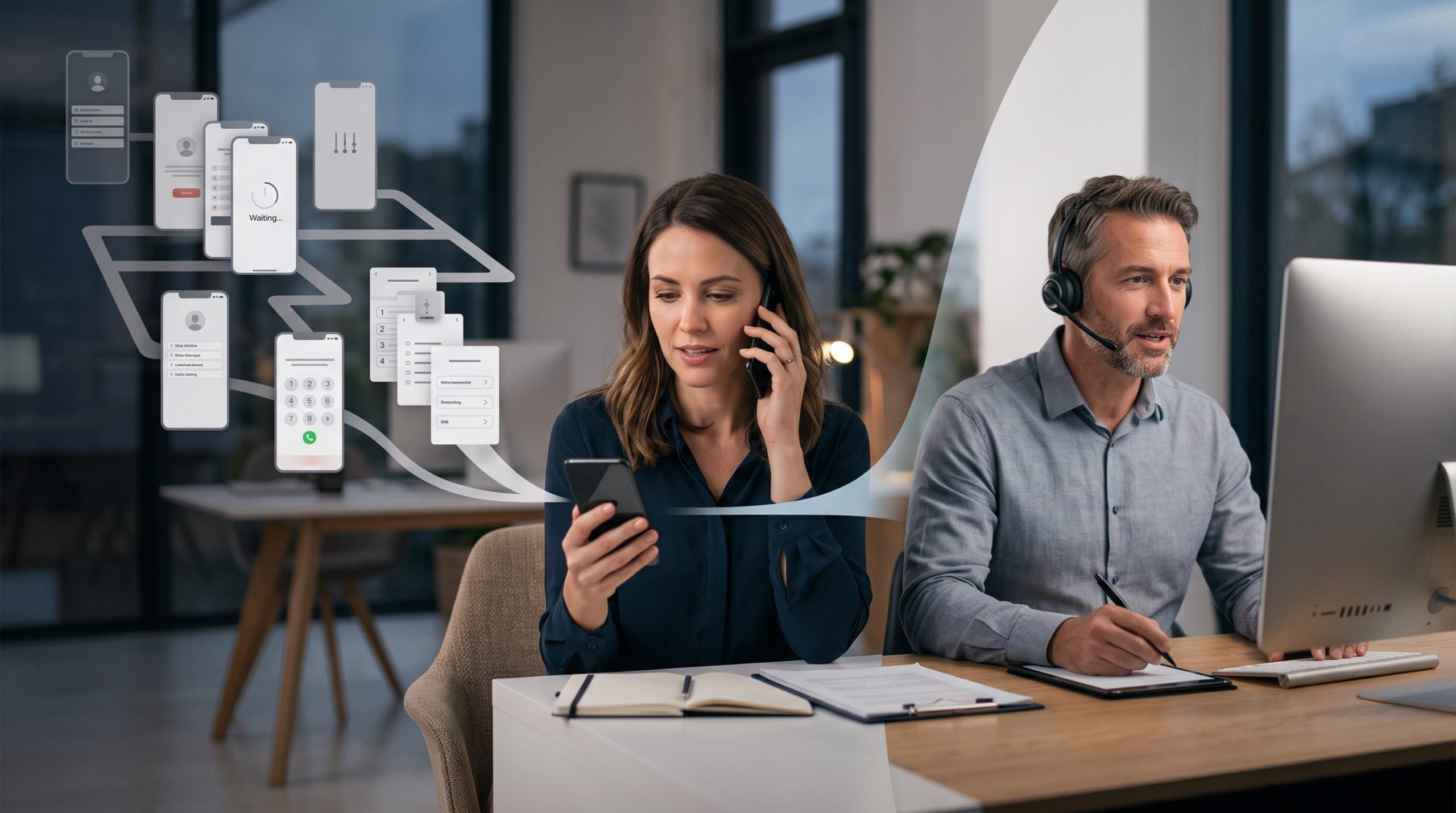
Automated phone systems have a real and valid place in customer service. For simple, routine tasks — checking a balance, confirming a store’s hours, routing a call to the right department — an IVR system can be efficient, cost-effective, and entirely adequate for what the caller needs.
But there is a specific moment where IVR systems consistently fail to meet caller expectations: when the caller is ready to make a decision, not just get routine information.
Research on customer preferences shows that when it comes to urgent or high-consideration interactions, customers overwhelmingly prefer a live agent over an automated system. One recent survey found that 88% of customers preferred speaking to a human over navigating an IVR menu, and more than 60% specifically preferred a live associate for reasons related to efficiency, privacy, and speed. [1]
That preference becomes even more pronounced in industries where the caller is not browsing casually but making a genuinely important decision — home services, legal matters, insurance, healthcare, and education among them. A consumer calling about a home repair emergency, a legal question, or an enrollment decision is not looking to navigate a menu tree of options. They are looking for a real conversation, with a real person, who can answer their specific question and move them toward a resolution.
The mismatch between IVR systems and high-urgency, high-consideration calls is well documented in customer experience research. When callers with genuinely important or time-sensitive needs are routed through multiple layers of automated menus before reaching a human, satisfaction drops sharply, and a meaningful percentage of those callers abandon the call entirely before ever getting the help they were looking for. [1]
This does not mean IVR technology is obsolete or should be eliminated. Used correctly — for simple routing, basic information, or after-hours triage — it remains a useful and cost-effective tool. The failure occurs when businesses use IVR as a universal front door for every type of call, regardless of urgency or complexity, forcing high-intent, ready-to-buy callers through the same friction-heavy process designed for routine inquiries.
The businesses that get this right use a tiered approach: automated systems for the interactions where they genuinely add efficiency without frustrating the caller, and immediate access to a live, knowledgeable agent for calls that carry urgency or complexity. Identifying which calls belong in which category — and routing accordingly — is one of the most impactful decisions a business can make in its inbound call strategy.
For any business in a high-consideration vertical, the question worth asking is simple: when a genuinely interested, ready-to-decide prospect calls, how many steps stand between them and a real conversation? Every one of those steps is an opportunity for them to hang up and call a competitor instead.
Conversion Media Group routes high-intent callers directly to trained live specialists, precisely because urgency and automation rarely mix well. Call us at 1-800-419-3201 to learn more.